How to Ride the B2B Payments Innovation Wave Great read: Special Thanks to PYMNTS | JULY 2, 2024
B2B payments power trillions of dollars in annual payments flows. Much of those flows are handled via checks and other traditional processes that are riddled with pain points, redundancies and sunk time and costs. All these factors can lead to longer DSO (days sales outstanding), adversely affecting firms’ financial health.That’s why, with the news Monday (July 1) that accounts payable (AP) automation and procurement solutions provider Basware has integrated with Amazon Business to streamline purchasing and procurement for business customers, capturing the white space opportunity B2B digitization represents is top of mind for forward-thinking companies. The digital transformation of the B2B landscape is only accelerating. More businesses are moving away from paper checks and manual processes toward electronic payment methods. In order to compete effectively against this evolving backdrop, firms will need to assess their own AP and accounts receivable (AR) needs, as well as those of their current and would-be partners. Businesses that embrace this change and are able to stay ahead of the wave of digital innovation shaping the B2B landscape — particularly the AP and AR function — will be those best positioned to succeed in the future.
Escaping the Reliance on Legacy B2B Payment Methods The traditional B2B payment process, often characterized by mechanisms like paper checks and manual invoicing, is fraught with inefficiencies. It involves time-consuming tasks such as data entry, error reconciliation and physical mailing, and leaves firms at a disadvantage when it comes to meeting evolving business partner expectations around greater efficiency, convenience and security.
PYMNTS Intelligence in “Getting Paid: Digital Payments for Improving Cash Flow and Customer Experience” found that 79% of B2B suppliers want to receive digital payments, including wire, automated clearing house (ACH) and virtual cards. Faster payment processing is not the only impetus, either: 76% of firms believe that buyers are likelier to pay on time when they pay electronically.Crucially, electronic payments provide businesses with real-time visibility into their cash flow. This transparency allows for more accurate forecasting and better financial planning. “It’s not just the visibility, it’s the real-time visibility and being able to take that data and transact and make decisions based on that data in real time,” Ari Widlansky, managing director and U.S. chief operating officer at Esker, told PYMNTS. “This is where you can unlock value across the entire invoice-to-cash experience.” Automated payment systems can also streamline cash flow management by ensuring timely payments and reducing the risk of late fees or missed payments. This agility is crucial in a competitive market where the ability to quickly adapt to changing financial conditions can be a significant advantage.
Embracing Digital Transformation’s Acceleration Across B2B Payments The digital payment landscape is continuously evolving, driven by technological advancements and changing business needs. To stay ahead of the curve, businesses must embrace a culture of continuous improvement and adaptation. This involves regularly reviewing and updating payment processes, staying informed about emerging technologies and being open to adopting new solutions that offer greater efficiency and security.
Businesses must also engage with their partners to understand their payment preferences and capabilities. WEX Chief Strategy Officer Jay Dearborn told PYMNTS in May that bringing B2B payments fully into the digital age needs a global platform with three elements — payments, data and software — working concurrently to help simplify commercial transactions. “The network of buyers and sellers is incredibly complex,” Dearborn said. “When I think about modernization, I’m always trying to think about our largest customers and our smallest customers. What are the use cases that payments will help them unlock, creating more ease in the way that they do their business?”To facilitate seamless transactions, businesses should consider adopting common payment platforms that are widely accepted by their partners. Standardizing on platforms that support multiple payment methods, including ACH, wire transfers and virtual cards, can simplify transactions and enhance interoperability.“The suppliers that are not as flexible and willing to embrace these new forms of payments are going to lose business, while the buyers who are not using them are losing revenue, which results in them not being as competitive in their space,” ConnexPay founder and CEO Bob Kaufman told PYMNTS in March. Strategically embracing the current wave of B2B innovation will not only future-proof businesses but also help position them for sustained growth and success.
Der Einfluss von digitalem Marketing und Social Media auf das klassische Marketing ist erheblich und zeigt sich in verschiedenen Bereichen.
Hier sind einige der wichtigsten Auswirkungen:
1. Erweiterte Reichweite und Zielgruppenansprache Durch digitales Marketing und Social Media können Unternehmen eine viel größere und gezieltere Zielgruppe erreichen. Plattformen wie Facebook, Instagram, Twitter und LinkedIn ermöglichen es ihnen, ihre Botschaften an spezifische demografische Gruppen zu richten und so die Effizienz ihrer Marketingkampagnen zu steigern.
2. Interaktive und Echtzeit-Kommunikation
Social Media bietet eine Plattform für direkte Interaktion zwischen Unternehmen und Verbrauchern. Dies ermöglicht sofortiges Feedback und die Möglichkeit, Beziehungen zu Kunden aufzubauen und deren Bedürfnisse und Vorlieben besser zu verstehen.
3. Kosten-Effizienz
Im Vergleich zu traditionellen Marketingmethoden wie Print-, Radio- oder TV-Werbung ist digitales Marketing oft kostengünstiger. Online-Werbung kann mit relativ geringem Budget durchgeführt werden und bietet dennoch eine hohe Reichweite und Wirkung.
4. Messbarkeit und Analyse
Ein großer Vorteil des digitalen Marketings ist die Fähigkeit, die Leistung von Kampagnen in Echtzeit zu messen und zu analysieren. Tools wie Google Analytics, Facebook Insights und andere bieten detaillierte Einblicke in die Effektivität von Marketingmaßnahmen, sodass Unternehmen ihre Strategien kontinuierlich optimieren können.
5. Personalisierung und Zielgerichtetheit
Durch den Einsatz von Datenanalyse und Algorithmen können Unternehmen maßgeschneiderte Inhalte und Angebote für individuelle Nutzer erstellen. Dies erhöht die Relevanz der Marketingbotschaften und verbessert die Kundenbindung.
6. Multimediale Inhalte
Digitales Marketing ermöglicht den Einsatz verschiedener Medienformate wie Videos, Infografiken, Blogs und Podcasts, um Botschaften zu vermitteln. Dies erhöht die Attraktivität und das Engagement der Zielgruppe.
7. Virales Marketing
Social Media bietet die Möglichkeit, dass Inhalte viral gehen können. Ein erfolgreiches virales Video oder Posting kann eine enorme Sichtbarkeit und Bekanntheit für eine Marke schaffen, oft ohne zusätzliche Kosten.
8. Integration von E-Commerce
Viele Social Media Plattformen integrieren E-Commerce-Funktionen, die es den Verbrauchern ermöglichen, Produkte direkt über die Plattformen zu kaufen. Dies verkürzt den Weg vom Marketing zum Verkauf und fördert den sofortigen Konsum.
Auswirkungen auf klassisches Marketing:
Rückgang der Nutzung traditioneller Medien: Mit dem Aufstieg des digitalen Marketings haben viele Unternehmen ihre Investitionen in traditionelle Werbeformate reduziert.
Kombinierte Strategien: Viele Unternehmen setzen auf eine Mischung aus traditionellen und digitalen Marketingstrategien, um eine breitere Zielgruppe zu erreichen und verschiedene Marktsegmente anzusprechen.
Veränderter Fokus: Klassische Marketingmethoden müssen sich anpassen und oft digitale Elemente integrieren, um relevant zu bleiben. Beispielsweise werden Printanzeigen häufig mit QR-Codes versehen, die auf Online-Inhalte verlinken.
Zusammengefasst hat digitales Marketing und Social Media das klassische Marketing revolutioniert, indem es neue Möglichkeiten für Interaktion, Personalisierung und Effizienz geschaffen hat. Unternehmen, die diese neuen Techniken erfolgreich integrieren, können einen erheblichen Wettbewerbsvorteil erzielen.
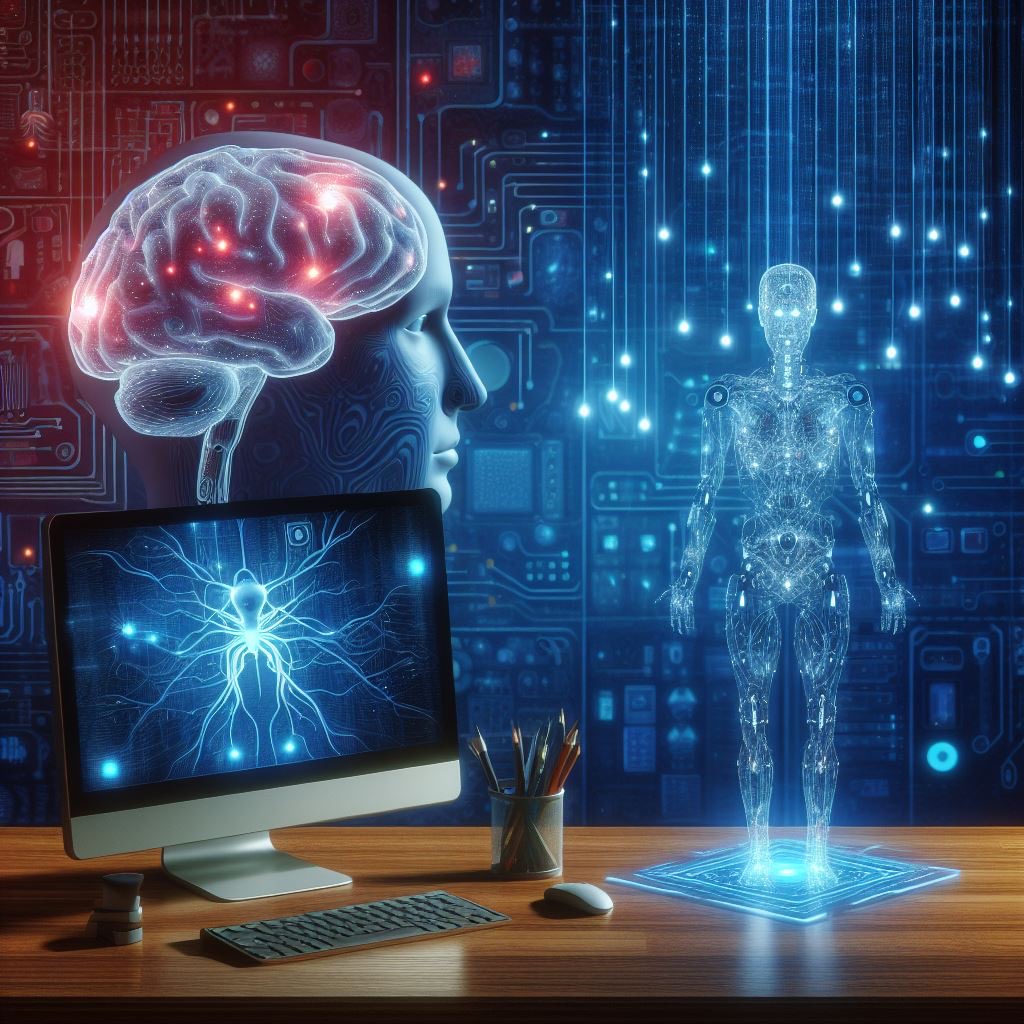
Human Intelligence and Artificial Intelligence in a Collaborative Future
This short article explores the potential for synergistic collaboration between human intelligence (HI) and artificial intelligence (AI), arguing that their combined strengths can unlock unprecedented opportunities in various fields, particularly in marketing and sales. By analyzing the unique capabilities of each, the paper proposes a framework for leveraging AI’s computational power and data processing abilities to enhance human decision-making, ultimately leading to more effective and impactful outcomes.
The Cognitive Landscape:
1.1 Human Intelligence (HI):
Human intelligence, rooted in the complex neural architecture of the brain, encompasses a wide range of cognitive abilities, including:
Learning and Adaptation:Humans possess the capacity for rapid learning and adaptation, enabling them to acquire new knowledge and skills throughout life.
Creativity and Innovation:HI fuels the generation of novel ideas, solutions, and artistic expressions.
Emotional Intelligence:Humans possess the ability to perceive, understand, and manage emotions, both in themselves and others.
1.2 Artificial Intelligence (AI):
AI, built upon algorithms and vast data sets, exhibits strengths in:
Data Processing and Analysis:AI excels at processing and analyzing large volumes of data, identifying patterns and generating insights that may be difficult for humans to discern.
Predictive Modeling:AI can be trained to predict future outcomes based on historical data, aiding in decision-making and risk assessment.
Automation:AI can automate repetitive tasks, freeing up human resources for more strategic and creative endeavors.
Bridging the Gap: A Collaborative Approach
While HI and AI possess distinct strengths, their limitations can be mitigated through collaboration.
2.1 AI Augmenting Human Decision-Making:
AI can serve as a powerful tool to augment human decision-making, particularly in complex domains like marketing and sales. By analyzing customer data and market trends, AI can provide valuable insights and recommendations, enabling humans to make more informed and strategic decisions.
2.2 The Role of Neuro-Marketing:
Neuromarketing, a field that combines neuroscience and marketing, provides insights into the emotional and cognitive processes underlying consumer behavior. By understanding the neural mechanisms driving purchasing decisions, marketers can leverage AI to create more effective and targeted campaigns.
2.3 Addressing the „Emotional Gap“:
While AI excels in data analysis and pattern recognition, it currently lacks the capacity for genuine emotional understanding. However, research into affective computing and artificial emotional intelligence is ongoing, suggesting that AI may eventually be able to better comprehend and respond to human emotions.
The Future of HI and AI Collaboration:
The future of HI and AI collaboration holds immense potential for innovation and progress across various fields. By harnessing the strengths of both, we can unlock new possibilities for:
Personalized Marketing and Sales:AI can personalize marketing and sales strategies based on individual customer preferences and behaviors, leading to more effective engagement and conversion.
Improved Healthcare and Medical Diagnosis:AI can assist medical professionals in diagnosing diseases, developing personalized treatment plans, and conducting research.
Enhanced Education and Learning:AI can personalize learning experiences, provide individualized feedback, and automate administrative tasks, freeing up educators to focus on student engagement and development.
Conclusion:
The future of intelligence lies not in a competition between HI and AI, but in their harmonious collaboration. By leveraging their unique strengths and addressing their limitations, we can create a future where HI and AI work in tandem to unlock unprecedented opportunities for human progress and societal advancement.
For further insights into understanding human intelligence and leveraging AI and to find the right path to ethical decision making,
ADAC Kreditkarte: Solarisbank übernimmt im dritten Quartal 2024 Quelle: mobiFlip von Rene Hesse vom 15.02.2024
Gewiss wird mit großem Engagement von allen Beteiligten daran gearbeitet, dieses äußerst komplexe Projekt zu einem Erfolg zu führen. Wenig überraschend und im Artikel bereits erwähnt, spielt neben der Reputation und Leistungsfähigkeit der beteiligten Banken und Servicepartner auch die Gewährleistung eines reibungslosen Übergangs, besonders für die Kunden der ADAC Kreditkarte eine wichtige Rolle. Die ADAC Finanzdienste GmbH und die Solarisbank AG arbeiten künftig beim Kreditkartenprogramm des ADAC zusammen. Das wurde bereits im Jahr 2022 verkündet. Dann gab es erhebliche Verzögerungen und jetzt ist klar, wann es losgehen soll. Die Solarisbank übernimmt im dritten Quartal 2024 die technischen Prozesse und löst damit die Landesbank Berlin (LBB) als Herausgeber der ADAC Kreditkarte ab.
Bis zur technischen Migration in diesem Quartal läuft die Partnerschaft mit der LBB weiter, alle Leistungen stehen den Kreditkarteninhabern weiterhin uneingeschränkt zur Verfügung.ADAC Kreditkartenportfolio wird weiterentwickelt. Der Vorstand der ADAC SE, Mahbod Asgari, betont, dass die Kooperation mit der Solarisbank die Möglichkeit bietet, das Kreditkartenportfolio weiterzuentwickeln und den Bedürfnissen der bestehenden Kunden Rechnung zu tragen. Die Plattform des neuen Partners ermöglicht es, die bestehenden Services für die ADAC-Mitglieder fortzuführen und das Leistungsspektrum zu erweitern. Die Migration auf Solaris wird nahtlos und sorgfältig vorbereitet, um einen reibungslosen Übergang zu gewährleisten, heißt es.
In der Übergangszeit bis zur technischen Umstellung besteht für die bisherigen Nutzer der ADAC Kreditkarte kein Handlungsbedarf. Die Kreditkarten können weiterhin genutzt werden und alle Leistungen wie Tankrabatte und Versicherungsleistungen
🎄✨Merry Christmas & a happy new year 2024🥂
Dear friends, I wish you a holiday full of joy, health and laughter! Thank you for a fantastic year. I hope to see you all safe and sound in the new year. Here’s to a great new year 2024! Best regards, Michael
__
Liebe Freunde, ich wünsche euch ein Fest voller Freude, Gesundheit und Gelächter! Vielen Dank für ein fantastisches Jahr. Ich hoffe, dass wir uns alle gesund und munter im neuen Jahr wiedersehen. Auf ein großartiges neues Jahr 2024!
Herzliche Grüße, Euer
Michael